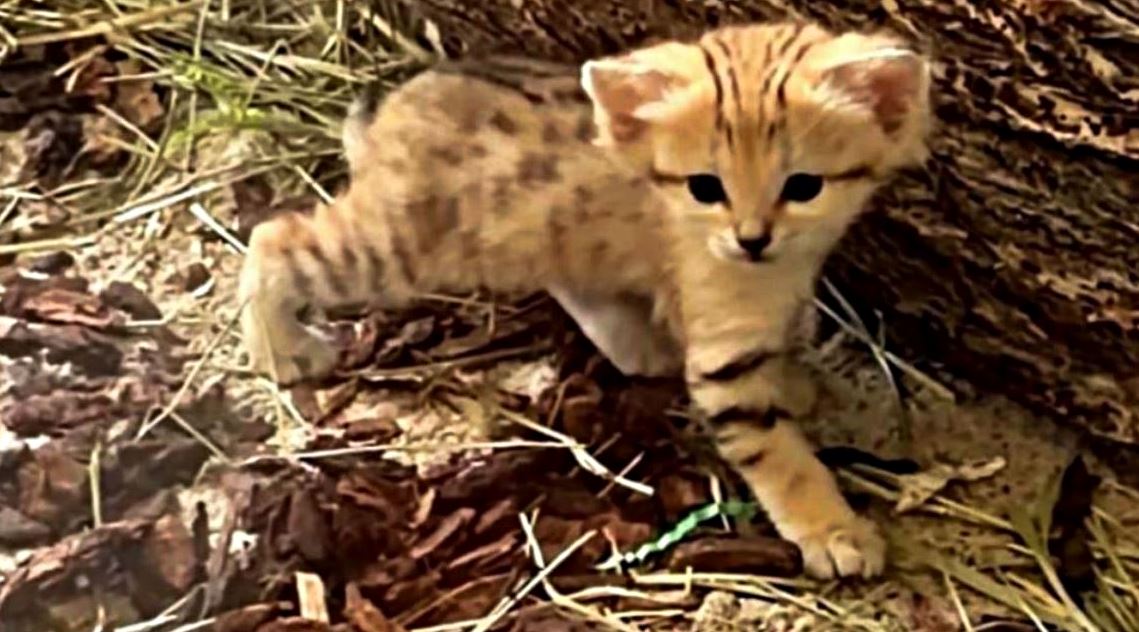
SALT LAKE CITY, Utah, July 3, 2026 (Gephardt Daily) — Utah’s Hogle has announced the Tuesday birth of a sand cat kitten to first-time parents Cleo and Asim.
The kitten remains unnamed while Hogle Zoo’s team determines whether it is male or female.
“Cleo is a fairly laid-back sand cat who loves to play and enjoys a good nap spot,” said Brittany Wildman, Animal Care Supervisor – Small Animal Building, in a Friday news release.
“Her laid-back approach has served her well as a first-time mom, helping her navigate the unknowns of parenthood,” Wildman said.
“She is a very attentive mother and can frequently be seen grooming her kitten and closely supervising playtime.”
Guests may see Cleo and the kitten in the Small Animal Building. Sand cats have incredibly sensitive ears, so Hogle Zoo is asking guests to speak in lower voices when they visit.
Cleo came to Hogle Zoo in May 2025 following a breeding recommendation through the Association of Zoos and Aquariums’ Sand Cat Species Survival Plan, which helps maintain healthy, genetically diverse populations of animals in accredited zoos while supporting long-term conservation efforts.
Native to some of the harshest environments on Earth, sand cats are perfectly adapted to life in dry, arid regions. They inhabit three distinct areas of the world: Africa’s Sahara Desert (including Algeria, Niger, and Morocco), the Arabian Peninsula, and parts of Central Asia (including Turkmenistan, Iran, Pakistan, and Afghanistan).
These small but resilient cats are built for extremes. In their natural habitat, daytime surface temperatures can soar to 124°F and drop to near freezing at night. Sand cats avoid these extremes by retreating to burrows during the hottest parts of the day and emerging at night to hunt.
Despite their size — usually slightly smaller than a domestic cat — sand cats are fearless hunters. Their diet includes small rodents, birds, reptiles, and even venomous snakes like vipers. Their speed, agility, and impressive hunting instincts make them one of the desert’s most formidable predators.
For more information about Hogle Zoo, visit its website.
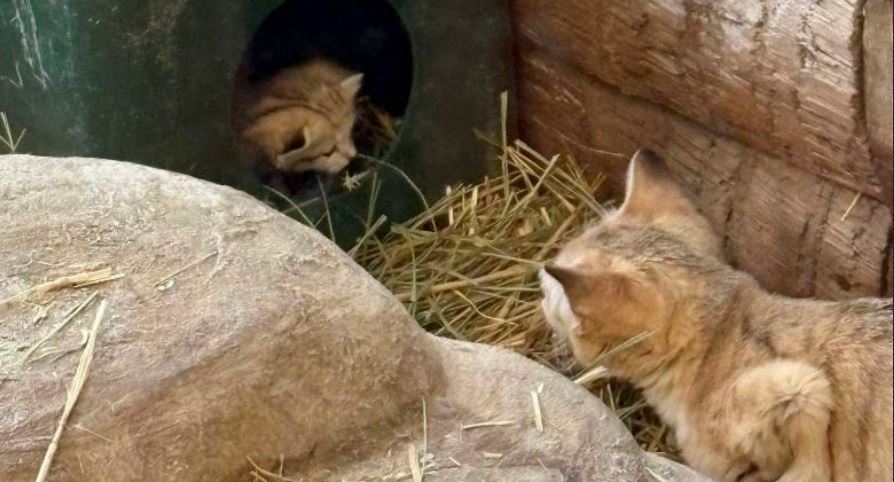
Mother sand cat Cleo and her kitten. Photo: Hogle Zoo