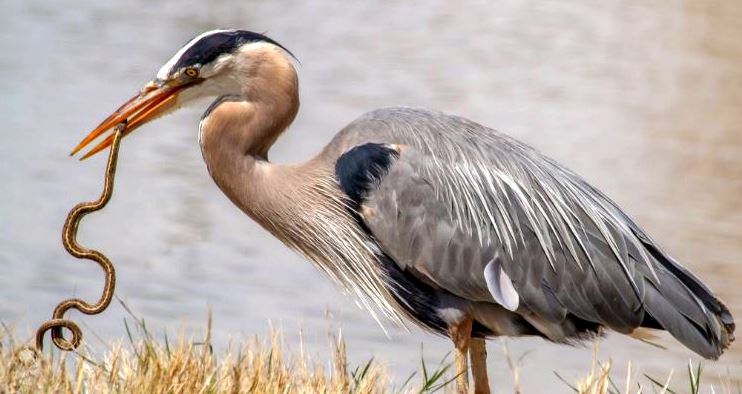
FARMINGTON, Utah, April 5, 2026 (Gephardt Daily) — The great blue heron will be on display at an upcoming viewing event led by state wildlife officials.
Attendees can expect to see up to 20 of the great blues’ nests at a man-made rookery on site hosting the giant birds, which can approach up to 5 feet tall with 7-foot wingspans.
The free viewing event will take place on Saturday, April 18, from 11 a.m. to 3 p.m. at the Utah Division of Wildlife Resources’ Eccles Wildlife Education Center, at 1157 S. Waterfowl Way in Farmington.
DWR biologists will be available to answer questions and to help participants spot herons in the area. Spotting scopes and binoculars will be available for use, but you should bring your own if you have them.
To avoid disturbing the herons, visitors must stay in the parking lot area and on designated trails, the DWR said, and not approach the rookery poles.
Every year from February to June, great blue herons nest in the rookery near the DWR’s George S. and Dolores Doré Eccles Wildlife Education Center. The herons primarily feed on fish and amphibians, so they typically build their nests in tree-top colonies near the water.
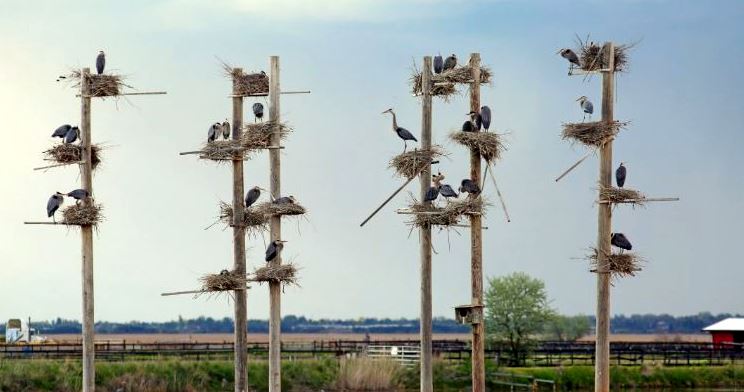
Photo: Utah Division of Wildlife Resources
Males collect the nesting material — usually sticks of various sizes — and the females build the nests. The nests can sometimes reach up to 3 ½ feet in diameter. Once constructed, nests are often reused in following years, which is why the rookery at the Eccles Wildlife Education Center is a great place to see these birds.
“We are excited to host this viewing event again, giving visitors of all ages a chance to observe these large birds relatively close,” Eccles Wildlife Education Center Coordinator Robin Goodman said. “It’s fun to see the young birds interacting with their parents, so we hope the community members will take advantage of this incredible viewing opportunity!”
The herons lay between one and seven eggs each year, and both parents alternate incubating the eggs for 25 to 29 days. Young herons can typically fly after two months, but sometimes remain near the nest site for up to five months.
Great blue herons are the most widespread North American heron and can be found from Alaska to northern South America. In Utah, they are the most commonly seen heron species and can be found throughout the state, typically along the shorelines of lakes and rivers, as well as in marshes.
A family-friendly egg decorating craft will be available inside the education center, while supplies last. Bathroom facilities are also available at the center.
While the event is free, participants are asked to register in advance on Eventbrite and to bring a nonperishable canned food item to donate to the Bountiful Food Pantry to help support the local community.