SALT LAKE CITY, Utah, Nov. 10, 2025 (Gephardt Daily) — The Utah Division of Wildlife Resources, Utah Department of Natural Resources officers and partnering agencies have inspected 288,000 boats this season for quagga mussels and other invasive aquatic species.
Lake Powell is currently the only Utah waterbody infested with invasive quagga mussels, says a news release issued by the Utah DWR.
Statewide, aquatic invasive species technicians with the DWR, Utah State Parks, Arizona Game and Fish Department and the National Park Service, as well as DNR officers, have inspected 288,554 boats and performed 6,509 decontaminations since Jan. 1.
Of those total numbers, 51,337 of the boat inspections and 1,886 of the decontaminations took place at stations in the Lake Powell area.

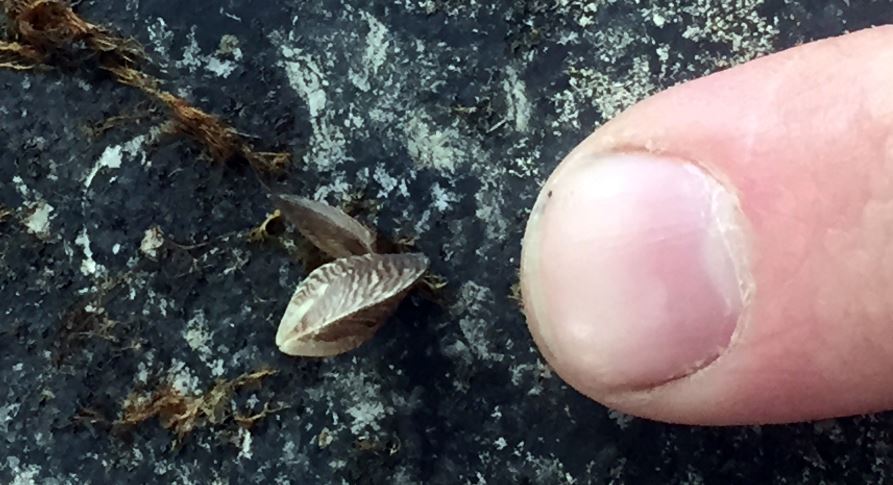
Quagga mussels. Photo: Utah DWR
This was a slight decrease from the 295,894 boats inspected statewide last year, but an increase from the 6,383 that were decontaminated in 2024.
The five dip tanks in Utah — located at the Stateline Ramp and Bullfrog marinas at Lake Powell, Utah Lake State Park, Sand Hollow State Park and Willard Bay State Park — performed 3,365 of the total boat decontaminations. The Utah Lake State Park dip tank — installed in May 2023 — performed the bulk of the decontaminations this year, with 965.
“The dip tanks continue to be invaluable in improving efficiency for our decontaminations of complex boats,” said Lt. Bruce Johnson, Utah Department of Natural Resources Law Enforcement Aquatic Invasive Species.
“These innovative resources have been instrumental in the fight against quagga mussels and other aquatic invasive species in Utah.”
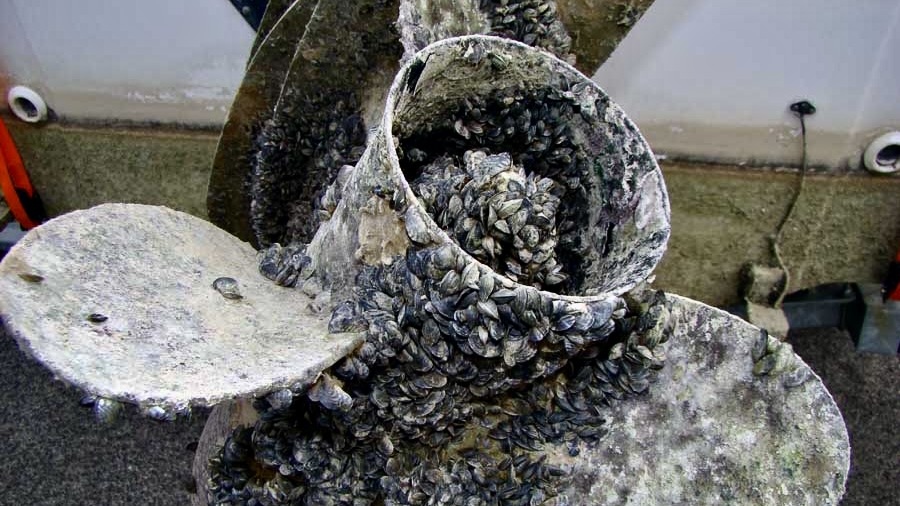
Photo: Utah Division of Wildlife Resources
DNR officers also detected a variety of aquatic invasive species violations this year, the majority of which were due to:
- Those with any watercraft failing to take the mandatory education course.
- Those with motorized boats failing to pay the required vessel-enrollment fee.
- Boaters and those with other watercraft (like waverunners, paddleboards and kayaks) failing to stop at mandatory inspection stations throughout the state.
- Boaters not removing drain plugs during transport.
“Overall, our boaters have been very compliant in helping to ensure that aquatic invasive species don’t spread in Utah,” Johnson said. “We really appreciate everyone’s efforts. And while the boating season is winding down for the year, make sure to plan ahead for next year and be sure to take the mandatory education course, pay the required fees, and display the necessary decals on your watercraft, so you can be ready for another great boating season next year.”
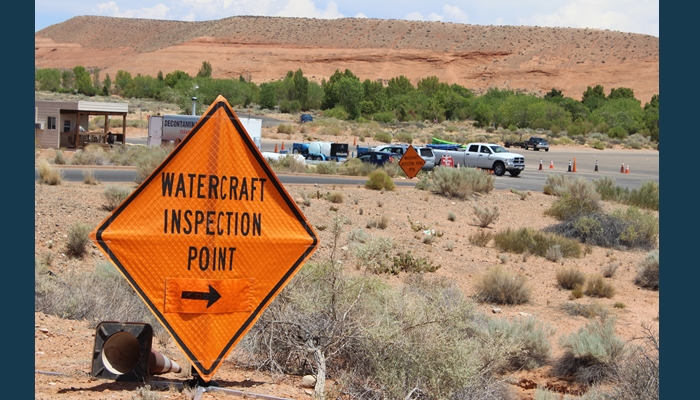
Photo: Utah Division of Wildlife Resources
Boaters should also remember that in the summer, the required dry time is seven days, during the fall it is 18 days, and it is 30 days during the winter. Wakeboard boats are defined as complex boats, which always require a 30-day dry time, unless they are properly decontaminated.
“During the winter season, there aren’t many available watercraft inspection staff at the stations across the state,” Johnson said. “So we ask boaters going to Lake Powell — or to neighboring states’ mussel-infested waterbodies — to please either have their watercraft decontaminated at that location before leaving, or to call us ahead of time if they are going to need a decontamination before their next launch.”
Visit the STD of the Sea website for further information regarding boater requirements.
Negative impacts of quagga mussels
- They plug water lines, even lines that are large in diameter.
- If they get into water delivery systems, it will cost millions of dollars annually to remove them and keep the pipes free, which can result in higher utility bills.
- They remove plankton from the water, which hurts fish species.
- Mussels get into your boat’s engine cooling system. Once they do, they’ll foul the system and damage the engine.
- When mussels die in large numbers, they stink and the sharp shells of dead mussels also cut your feet as you walk along the beaches.
Negative impacts of Eurasian watermilfoil
- This invasive plant is negative for aquatic ecosystems because it spreads quickly and grows in thick mats. Its density blocks out sunlight, and it outcompetes native plants, negatively impacting fish and other native aquatic species. Transporting even one piece of Eurasian watermilfoil (also called milfoil) to another waterbody can start a new population of the plant in that waterbody.
- Milfoil can clog irrigation pipes.
- It also can tangle around boat propellers and cause damage.
- Removing milfoil from a waterbody once it’s found there is extremely expensive.