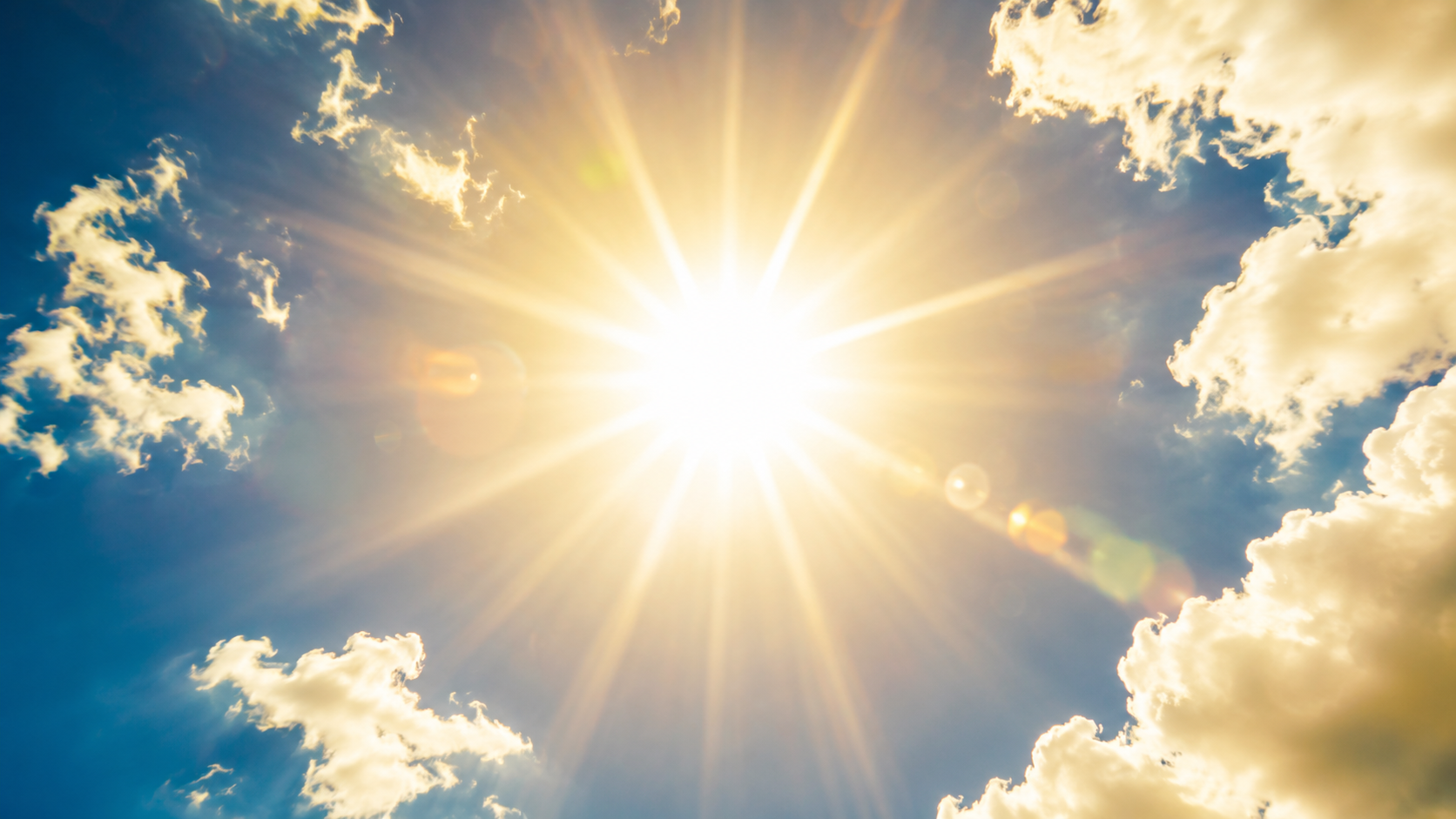
SALT LAKE CITY, Utah, July 10, 2026 — The National Weather Service in Salt Lake City has issued an Extreme Heat Warning covering much of Utah beginning Saturday, warning that dangerously hot temperatures could challenge daily and monthly records while increasing the risk of heat-related illness across the state.
The warning takes effect at noon Saturday for large portions of northern, central and southern Utah as a strong high-pressure system builds over the region.
For much of northern and central Utah, including the Wasatch Front, Cache Valley, Salt Lake Valley, Utah Valley, Wasatch Back, Uinta Basin, Castle Country and San Rafael Swell, the warning remains in effect until 6 a.m. Tuesday.
Forecasters said valley temperatures could reach 105 degrees, while many mountain valleys are expected to approach 100 degrees. Overnight lows in the lower to mid-70s are expected to provide little relief from the heat.
The warning includes the Salt Lake City, Ogden, Provo, Logan, Tooele, Park City, Heber City, Roosevelt, Price, Richfield, Green River and numerous other communities across northern and central Utah.
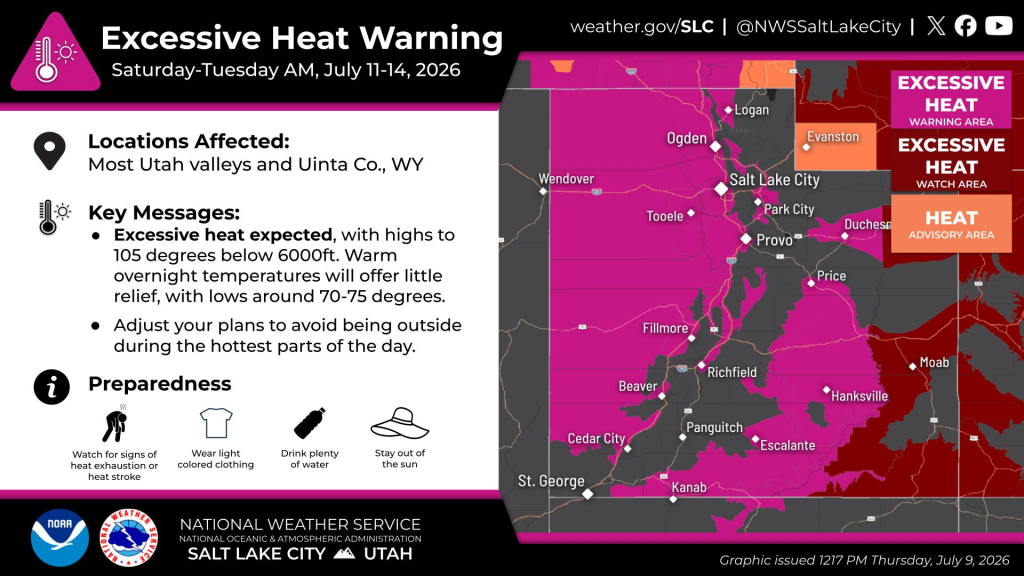
Graphic: National Weather Service Salt Lake City
Southern Utah warning
A separate Extreme Heat Warning has been issued for portions of southern Utah from noon Saturday until 6 a.m. Monday.
The warning covers western Millard and Juab counties, southwest and south-central Utah, Capitol Reef National Park and vicinity, western Canyonlands, and Glen Canyon National Recreation Area, including Lake Powell.
The National Weather Service said highs around 100 degrees are expected across most central and southern Utah valleys, with temperatures reaching 110 degrees in lower Washington County and the Glen Canyon Recreation Area.
Forecasters said confidence is high that temperatures Saturday and Sunday will challenge daily and monthly record highs. Overnight lows are expected to remain in the lower to mid-70s across much of the warned area, with lows in the lower 80s possible in lower Washington County.
The National Weather Service said the prolonged heat and limited overnight cooling will significantly increase the risk of heat-related illnesses.
Officials urge residents to drink plenty of fluids, stay in air-conditioned buildings when possible, avoid prolonged exposure to direct sunlight, and check on older adults, neighbors and others who may be vulnerable to extreme heat.
The weather service also reminds residents never to leave children or pets unattended in vehicles, where temperatures can become deadly within minutes.
Those who must work or exercise outdoors are encouraged to wear lightweight, loose-fitting clothing, schedule strenuous activities during the early morning or evening hours, take frequent breaks in shaded or air-conditioned areas, and watch for signs of heat exhaustion or heat stroke. Anyone experiencing heat stroke should be treated as a medical emergency, and 911 should be called immediately, the NWS advised.